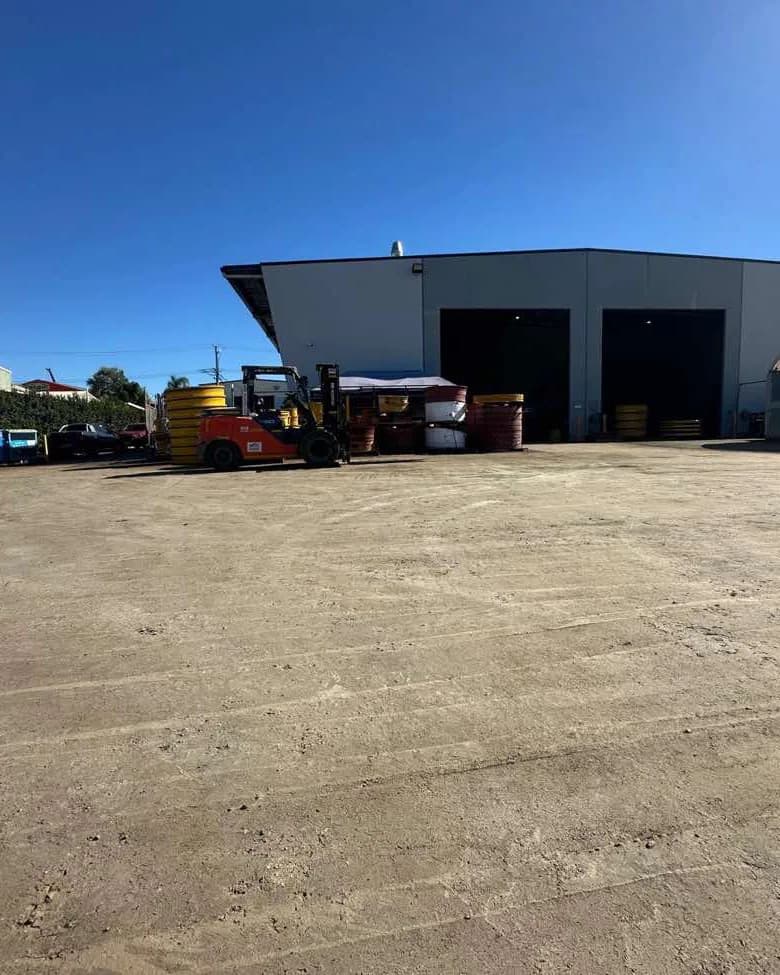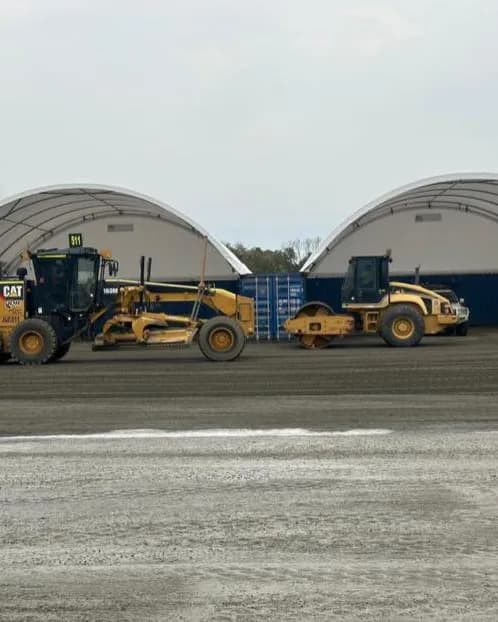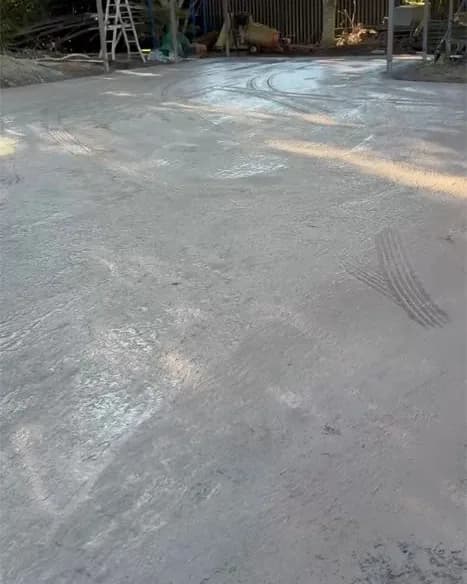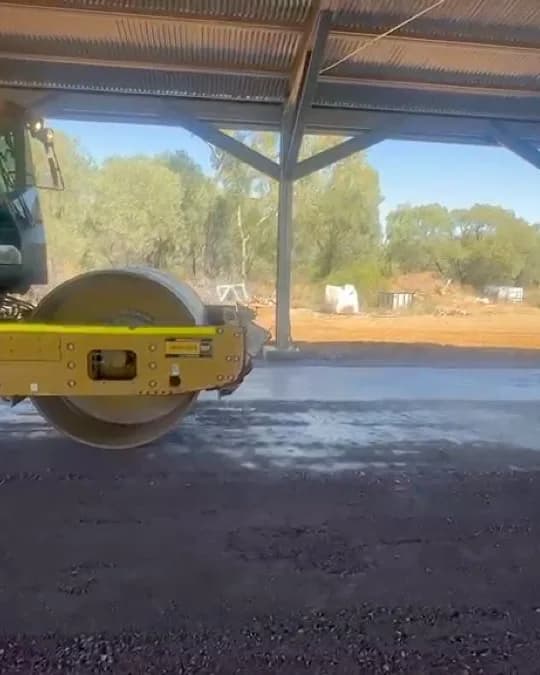
Keep making it good, pour a slab, or bind it.

SuperBase builds a bound hardstand out of the base already in your yard, area by area, without a pour, and without the patching cycle that follows.

60–70%

Below engineered concrete

Indicative. Varies with base material, climate and duty. Confirmed by site trial.

The yard never actually gets finished.

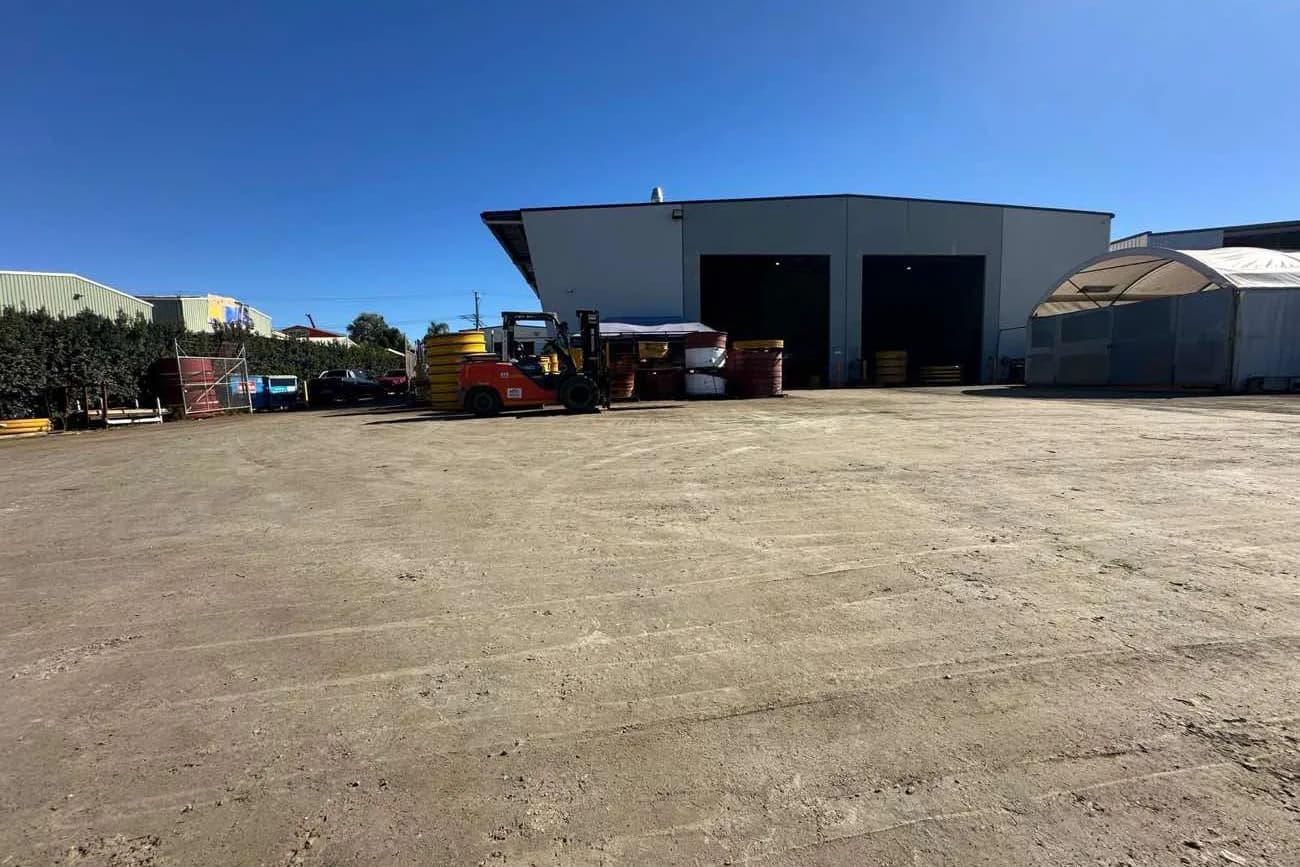
Heavy plant concentrates load onto small footprints in the same places, water gets into the base, and a level pad becomes ruts, potholes and loose stone. The usual answers are to keep making it good, or to pour a slab.

An untreated gravel yard with ruts, potholes and loose stone

Keep making it good

The cycle you keep paying for

  1. Potholes and ravelling that start small, take water, and then open up fast under traffic.
  2. Rutting and pumping where plant stands and turns, so the same areas need making good again and again.
  3. Recurring grader and patching hours that never actually finish the job.
  4. Loose stone chewing tyres, and out-of-level ground where plant has to stand.
  5. Mud in the wet: the yard slows down or stops, and it gets tracked onto the public road at the gate.
  6. Dust in the dry, across an area where people are working on the ground.
  7. Downtime every time an area has to come out of service to be repaired.
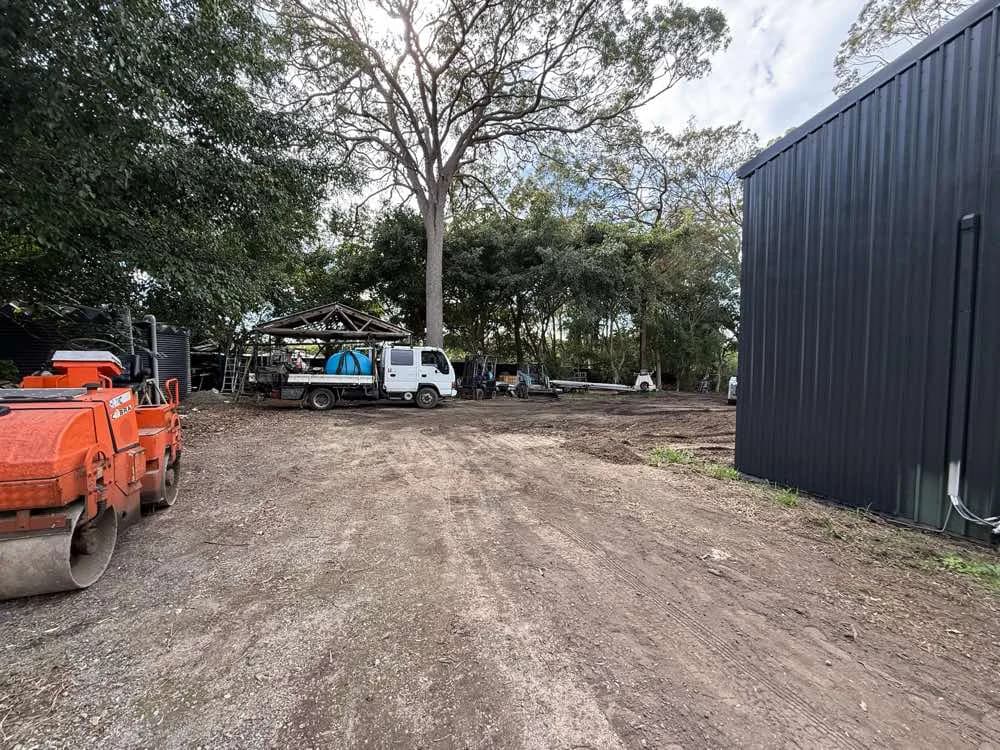
Part of a yard fenced off for formwork and a concrete pour

Pour a slab

Why concrete stalls

  1. Capital cost. Engineered concrete hardstand carries a rate that is hard to justify across a whole yard.
  2. The yard stops. Formwork, pour and strength gain take the area out of service for weeks.
  3. It is fixed. Change the yard layout and the slab is in the wrong place.
  4. Point loads still crack it. Repair then means saw-cutting, breaking out and disposal.
  5. Minimum quantities make treating one or two areas uneconomic.

There is a third option.

The same yard, held three ways.

*Indicative. Varies with base material, climate and duty. Confirmed by site trial. Cure times vary by site. Comparative pricing is against engineered concrete hardstand construction.
Keep making it goodPour a slabSuperBase
The workGrade and patch, again and againEngineered concrete: formwork and a pourA grader, water cart and roller binding the base you already have
Out of serviceEvery time an area has to be repairedWeeks, while the slab reaches working strengthTrafficable within hours of the final roll*
CostRecurring grader and patching hoursA rate that is hard to justify across a whole yardIndicatively 60–70% below engineered concrete*
ScopeNever actually finishes the jobMinimum quantities make one or two areas uneconomicArea by area, staged so the yard keeps trading

One product, dosed to suit what each area carries.

The same binder is applied at different rates depending on the duty of the area: a full mixed-through treatment where heavy plant stands, a lighter dosage where trailers marshal and pass.

Heavy plant standing on a level, bound pad
Full mixed-through

Heavy plant standing areas

How it is applied
Re-levelled and scarified through the existing base, with binder and water applied across all processes through to final wet roll.
Outcome
A hard, level standing area that holds its shape under concentrated loads.
A loader working a stockpile on a firm, bound apron
Full mixed-through

Stockpile & bulk material aprons

How it is applied
Full mixed-through treatment, dosed for repeated loader passes and sustained stockpile loading.
Outcome
Aprons that hold their shape under loaders instead of pushing out and rutting.
Stacked product and stored plant on a level, bound laydown area
Full mixed-through

Product & equipment laydown

How it is applied
Full mixed-through treatment to carry concentrated static loads over long periods.
Outcome
Stable standing for stacked product and stored plant without bedding in.
A semi-trailer turning through a bound internal access lane
Initial dosage + top coat

Internal access & turning lanes

How it is applied
Initial dosage mixed through the base, with an organic top coat over high-wear running lines.
Outcome
A running surface that holds level under multi-axle turning instead of corrugating.
Trailers parked on a bound marshalling area after rain
Lighter dosage

Trailer marshalling & load-out

How it is applied
As for access and turning lanes, at a lighter dosage rate.
Outcome
A marshalling area that stays trafficable through wet weather.
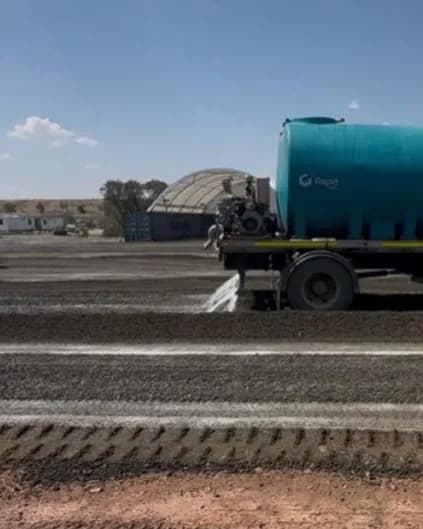
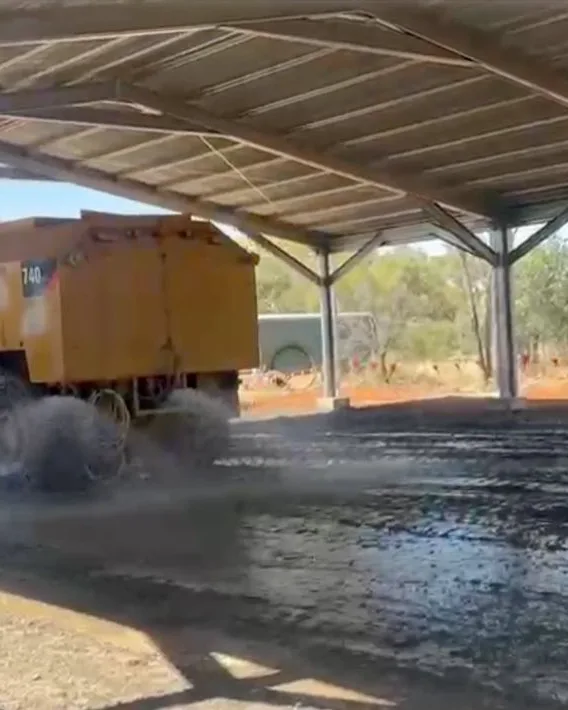
A water cart lightly watering a bound gate approach
Lighter dosage, by water cart

Gate approaches & perimeter

How it is applied
Lighter dosage applied by water cart as part of routine yard watering.
Outcome
Less dust in the dry and less mud tracked onto the public road.

Nominate one area.

We will treat it, test it, and put the numbers beside a concrete quote and a year of patching.

A trial area tests the surface, the strength figure and the business case at the same time, on your material, in your yard.

One marked-out trial area of bound surface within an untreated yard
02 — Trial area